The Lost Stars: why there is a civil war in Syria today
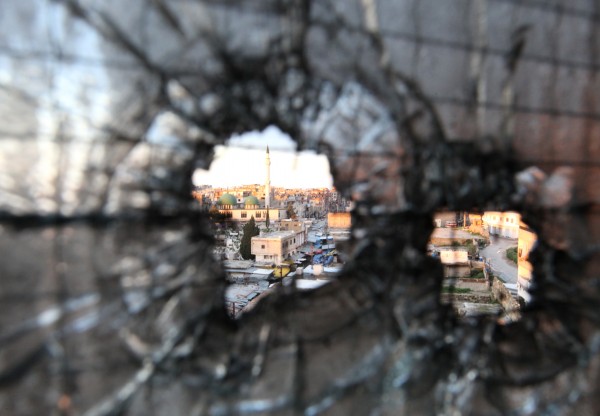
How do we explain the de facto civil war unfolding in Syria today? How do we predict what course it will take? How can we come up with viable and long-term solutions?
A good starting point would be to compare Syria with a country that bears a striking resemblance: Lebanon. This may seem surprising because the two countries (and two peoples) appear to be different.
Syrians regard themselves as being superior to Lebanese because their country suppresses confessional and ethnic identities in favour of a secular and all-embracing Arabism.
The Lebanese on the other hand look at the Syrians and they pity. Fortress Damascus is not a good place if you value creativity and free expression; it is the GDR of the Levant.
Broadly speaking, Syria is about unity, Lebanon is about freedom.
In reality, these differences developed only in the last 90 years of political and social evolution. What Syria and Lebanon have in common is grounded in centuries of shared experience: as part of the Greco-Roman world and then the Islamic, the last chapter of which was 400 years of of Ottoman Turkish rule. In 1920, both fell under the French mandate.
Something else they had in common was significant groups of non-Sunni Muslim minorities, who chafed under Ottoman Turkish rule and who had vowed never to fall under Sunni Muslim over-lordship again.
It was during the formative Mandate years (1920-46) that non-Sunni Muslim minorities (Christians, Alawites, Druze, Ismai’lis) began to develop survival strategies to adapt to the reality of living in a new political entity: the nation state. It is by recognizing and analyzing these survival strategies and their long-term consequences that one can trace the historic roots of the Lebanese civil war (1975-90) and the Syrian civil war (2011-present).
The minoritarian order
After the retreat of the Ottoman Turks from the Levant in 1918, Non-Sunni Muslim minorities faced an acute dilemma: how to survive and flourish within societies that were overwhelmingly Sunni Muslim.
The Maronites of Mount Lebanon came up with a survival strategy that was not at all original: cessation. They successfully lobbied France not to remain part of Sunni-majority Syria but to be given a state where they could enjoy a monopoly on political power. Thus, the State of Greater Lebanon was born, later to become the Republic of Lebanon.
At the time of its creation, it had a slim Maronite Christian majority, yet the distribution of wealth and power was weighed heavily in their favour. Despite its outwardly secular constitution, it was a country created because of religion, and its various sects competed with one another for wealth and power within the framework of a liberal (albeit flawed) democracy.
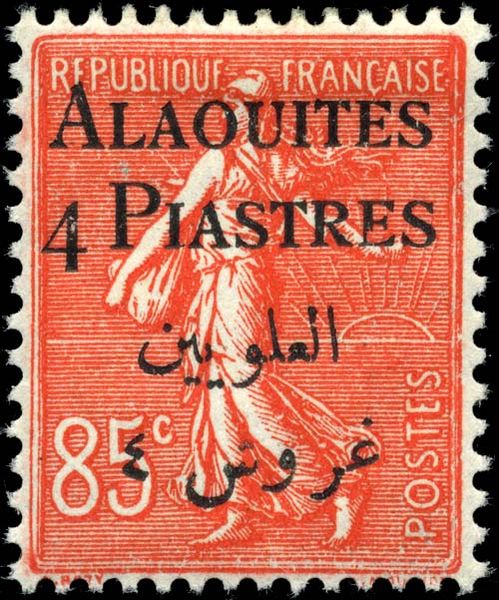
A postage stamp issued by the short-lived Alawite state.
For the non-Sunni Muslim minorities of Syria, it was a different story. The Alawites and Druze initially went along with French plans to have their own mini states, but the hostility of the economically influential Damascene and Aleppine bourgeoisie scuttled plans for independence. Long-term discrimination and neglect by the Ottomans denied the Alawites and Druze the chance to form their own states, while quasi-independence under the Ottomans and long-term French patronage enabled the Maronite Christians to “fly the roost”. Politically and economically the non-Sunni Muslims of Syria were too weak to go it alone.
The Alawites and Druze opted to be part of a unified Syrian Republic not out of choice, but out of necessity. They still had to meet the challenge of surviving and thriving in a Sunni Muslim-majority country where democracy entitles them only to a minority share of political power; not enough to guarantee that the Ottoman experience will never be repeated.
Instead of seeking independence as the Lebanese Christians had done, the non-Sunni Muslim minorities in Syria did quite the opposite: they embraced a secular, socialist brand of pan-Arabism and adopted it as their own. The Ba’th Party became a magnate for young, aspiring and poor Alawites, Druze and Ismai’lis who were drawn to the party’s secular and egalitarian creed.
By adopting pan-Arabism, the minorities had performed a great feat of one-upmanship; they had demonstrated to the Sunni Muslims that they were uber-patriots, prepared to relinquish centuries-old sectarian loyalties for the benefit of the entire Arab nation. By appearing to be so, they laid down a challenge to the Sunni Muslim majority to live up to this ideal vision of Syrian patriotism.
In reality, it was all a ruse. At first the Ba’th Party campaigned on issues of social justice such as agrarian reforms, which benefited poor Sunnis as well as impoverished Alawite peasants. But the minorities were not content with remaining as farmers. The religious minorities of Syria were still very much obsessed with the Ottoman trauma, and nothing short of a complete capture of power would allay their fears of once more becoming second-class citizens. One state institution was open to them: the military. It was through an active mass enlistment campaign, and a simultaneous policy of de-Sunnification of the officer corps following the 1963 Ba’th Party coup, that enabled religious minorities to first catch glimpse of the political power that they could enjoy under the guise of pan-Arabism and class warfare.
Ultimate power would eventually be won by a certain Hafiz Assad, a scheming Ba’thist air force pilot and son of a minor Alawite notable.
The centre cannot hold
The religious minorities in modern-day Syria and Lebanon responded differently to the challenge of surviving and thriving in a sea of Muslim. In Lebanon, the answer was secession; in Syria, it was pan-Arab unity. They were two different approaches to dealing with the same essential problem.
Despite the fact that they had lost political power, the Muslim bourgeois business and religious elite of Damascus and Aleppo did not resist the minoritarian order established by Hafiz Assad. Instead, they carved their own niche as the useful religo-merchant class: those who kept the economy ticking over, shared in the administration of the state and oversaw Muslim religious affairs – all the while enjoying the privileges of being junior partners in the mafia state run by an Alawite godfather.
Assad pursued a systematic policy of positive discrimination for religious minorities. In Assad’s Syria, it paid to be a Christian or an Alawite because it meant you had considerably better access to state patronage, both in the civil service and the military. Over a forty year period, this led to a disproportionate number of non-Sunnis becoming members of the elite. The Syrian novelist and former political prisoner Mustafa Khalifa notes in this excellent Arabic article that Christians in Syria currently represent only five per cent of the total population but account for 15-20 per cent of the bourgeoisie. A similar pattern can be drawn for Alawites and Druze. For the non-Muslim minorities, Syria was their country, it was their project.
Unlike poor Alawites, Druze or Christians, the Sunni Muslim working class had little ideological affinity with Assad’s Syria. Their conservative instincts are informed by unofficial religious education, supplemented by many hours of watching religious satellite channels and reinforced by weekly sermons at the mosque. For them, only religion bestowed real legitimacy upon a political order. The one that rules Syria today is run by “heretical” Alawites who managed to shift public discourse in a decisively secular direction, and by definition, in a manner prejudicial to the interests of the religious majority.
The order held, however, because it was able to contain the Sunni Muslim working class through a twin policy of repression by a multitude of security forces, and by providing the basics cheaply: food, water, housing, electricity and fuel. With rapid population growth, rampant corruption and the end of Soviet patronage, Assad was less able to provide these essentials to placate the masses. The Sunni Muslim “proles” in this Oceania bore the brunt of economic liberalisation reforms, which resulted in an exponential rise in prices and a net decline in purchasing power.
Poor Sunni Muslim farmers ached under the strain of increasing fuel and pesticide costs, a situation exasperated by several years of virtual drought (2007-2009) All the while, wealth and political power were concentrated in the hands of a globalised, minoritarian clique, represented most grotesquely in the figure of Assad’s billionaire cousin and Syria’s mister ten-percent, Rami Makhlouf.
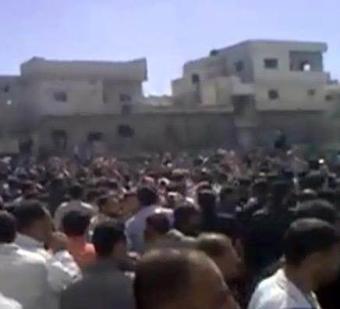
The spark: Deraa, 18th March 2011
The Sunni working class is a mixture of farmers, day labourers, small shop keepers, mechanics, taxi drivers, tradesmen, and of course, the unemployed. Because they had little money, they could not buy influence with the Alawite military elite as the wealthier Sunnis of Damascus and Aleppo had done.
Many lived in shabby and over crowded neighborhoods like Baba Amr in Homs for instance, or in small and dusty towns that enjoyed few amenities like Jisr Al-Shughur in Idlib. Because the doors of state patronage was locked to them, they felt the heavy hand of undeclared but institutional sectarian discrimination more than most. They watched on satellite television the unfolding of the Arab revolutions and saw an historic opportunity to turn the tables on the minoritarian order.
The first large-scale demonstration was held in Deraa on 18th March, and the chant was “Syria’s protector is its thief!” – essentially an economic demand. The fact that it grew rapidly into a nation-wide protest movement to topple the regime as a whole has much to do with the disillusionment of the Sunni Muslim working class with its living standard, and the most obvious lesson of the Arab Spring: that the hated mukhabarat secret police can be defeated, and that the West was willing to lend a hand.
The “Syrian revolution” is a revolt by Syria’s Sunni Muslim working class, which have fared poorly under the minoritarian order. The Assad mafia state has proved to be particularly prejudicial to their interests: the inequity in the distribution of political power and economic wealth was too stark, and too unjust. It is against this order (and not the Alawites per se) that the uprising in Syria aims to bring down. The survival strategy developed by religious minorities in post-colonial Syria has failed because it did not evolve new mechanisms to share wealth and political power with a rapidly growing and an increasingly aspirational Sunni Muslim population.
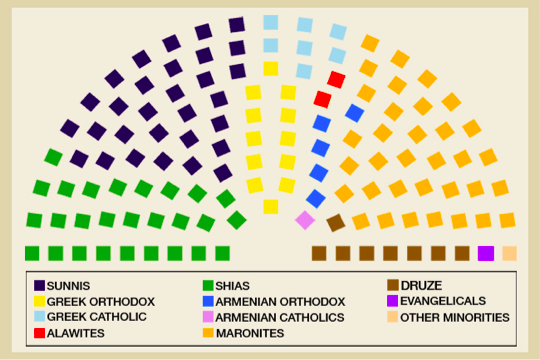
The Taif Agreement established a more equitable share of political power in Lebanon.
;
;
;
;
;
;
;
;
;
;
;
;
;
;
;
Lebanon was, in the words of the brilliant historian Albert Hourani, a lost star from the Ottoman galaxy. So too is Syria. The sectarian balance of power, so carefully maintained under the Ottoman millet system, has been shaken; the consequences are not difficult to predict. Look no further than to Lebanon circa 1975, when the entry of the heavily armed Palestinian Sunni Muslims into the sectarian melting pot created volatility in the system, causing a civil war that lasted for 15 years. It only ended in 1989 when a new political order was established following the signing of the Taif Agreement in Saudi Arabia, which established a more equitable distribution of wealth and political power between Christians and Muslims.
In Syria today there is a conflict of wills: the desire by a minority to remain free of majority domination, and a majority no longer willing to pay the price for that minoritarian privilege For both sides, it is first and foremost a struggle for survival. On the ground this battle is being fought with street protests but increasingly with bullets, tanks and roadside bombs. In the media, it is fought euphemistically, using the language of “democracy” and “human rights”, “salafists” and “terrorists”, “shabiha” and “Arourites”, etc. Neither side is willing to be honest and admit to the sad reality of the situation because that would be considered too “Lebanese”, unbefitting of a proud Syrian.
How I understand the Syrian revolution
On January 26th 2012 I participated in a BBC College of Journalism panel discussion on Syria. The attendance consisted of senior BBC journalists and broadcasters, some of whom are household names in the UK. What they were looking for was a nuanced understanding of what is happening in Syria from experts, which goes beyond the superficial and the cliche.
On the panel was Dr Fawaz Gerges of the LSE, who offered his own reading of the situation. Then it was my turn. This is what I had to say:
I looked at the Syrian revolution from a historian’s perspective and asked myself: how would historians in 30-40 years’ time explain the remarkable events that we are now witnessing? It is difficult to make those kind of judgements without the benefit of hindsight, but I had a go.
My reading is that the Syrian revolution is the revolution of the rural Sunni working classes against the Alawite-dominated military elite and the urban bourgeoisie (both Muslim and Christian) that has profited from the Assad dictatorship.
I make the case that the Syrian opposition, itself an elite group, albeit political/intellectual, is almost as fearful of the revolution as the regime itself because of the wide-sweeping social change that will follow a collapse of the status quo. That is why its role in the revolution is more mediator than leader.
Genuine democracy in Syria will usher in a new elite that will give political expression to disenfranchised sections of society, who in turn, will transform the nature and identity of the Syrian state. This is why regime loyalists (and some within the Syrian opposition intelligentsia) find the revolution to be so dangerous.
The collapse of the regime may not come soon because the social groups that represent the backbone of Assad’s Syria are still cohesive and believe in the Assad regime’s ability to survive. It is not so much belief in Bashar Al-Assad as blind faith in the system.
However, if Assad falls, it will be as a result of regional and international consensus on the need to remove him from power. That consensus has not yet been reached, and it may never be reached.
Keeping the system or ditching it is a separate question all together. Assad’s Syria without Assad is a scenario currently being floated by the political opposition and the west.
The success of the Syrian revolution is not a foregone conclusion. The regime is bolstered by Iran and Russia, and indirectly, by Israel’s better-the-devil-you-know attitude. It is also encouraged by the west’s reluctance to commit to military intervention – quite possibly the only effective deterrent that Assad will take seriously.
A lot will depend on Syrians’ ability to organize themselves and speak with one voice. The signs so far are not encouraging. The political opposition has not been able to offer a convincing narrative of what the Syrian revolution is about and what kind of Syria they wish to create. Simply saying that it is a revolution for democracy and human rights is not enough – the question is: whose democracy and whose human rights?
This may all sound too academic but unfortunately, this is what it takes to truly understand the Byzantine nature of Syrian politics and society. In other words, to make sense of the Syrian revolution.
Candid Cameraphone: My first article for the New Statesman
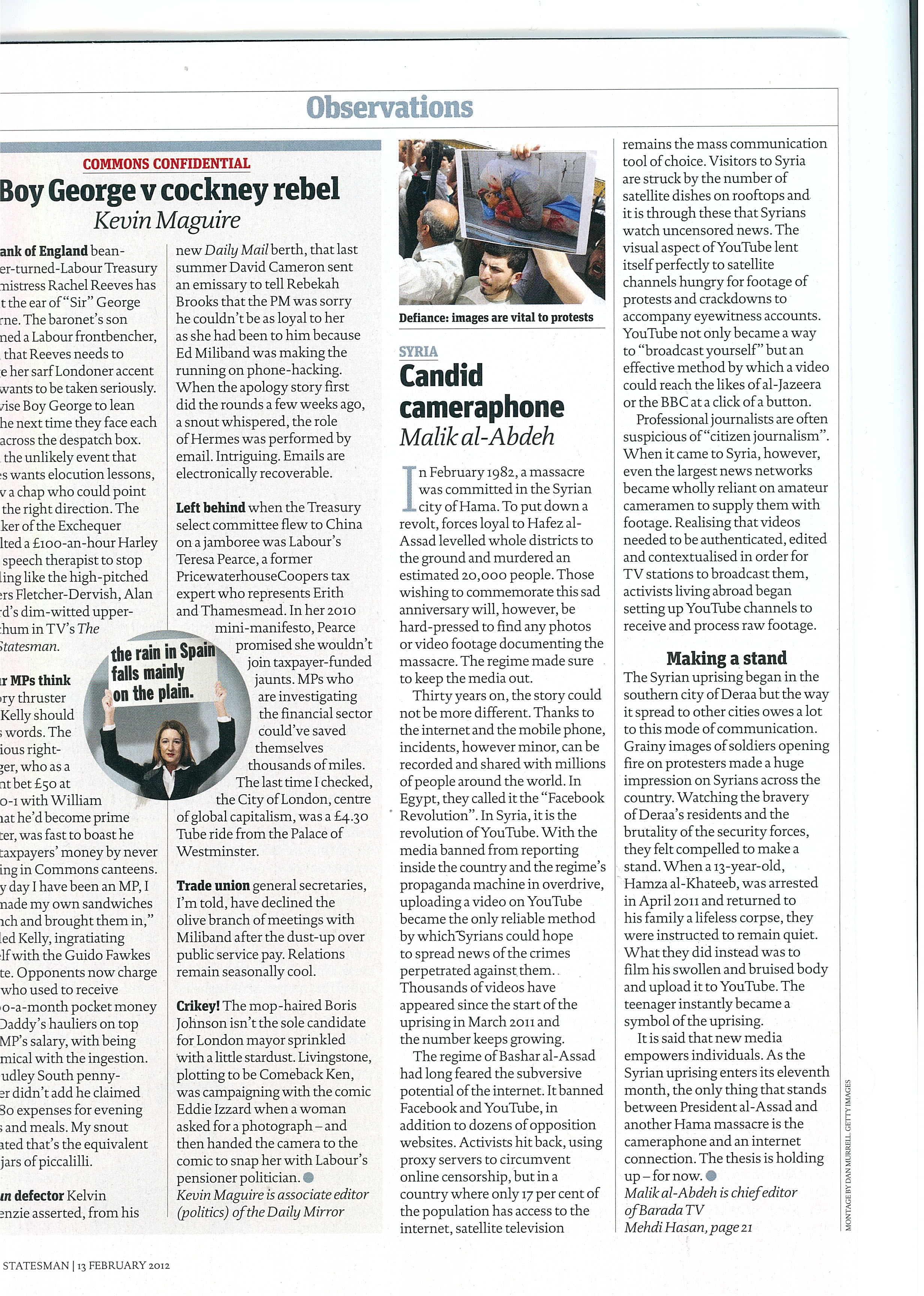
I was approached last week by the New Statesman magazine to write a short piece about the role of YouTube in the Syrian Revolution. I couldn’t possibly turn them down.
Below is the text of the article as it appeared in the 13th February edition of the magazine:
In February 1982 a massacre was committed in the Syrian city of Hama. To put down a revolt, forces loyal to President Hafiz Al-Assad levelled whole districts to the ground and murdered an estimated 20,000 people. Those wishing to commemorate this sad anniversary will however be hard pressed to find any photographs or video footage documenting the massacre. The regime made sure to keep the media out.
Thirty years on, the story could not be more different. Thanks to the Internet and the mobile phone, incidents, however minor, can be recorded and shared with millions of people around the world. In Egypt they called it the “Facebook revolution.” In Syria, it is the revolution of YouTube. With the media banned from reporting inside the country, and the regime’s propaganda machine in over-drive, uploading a video on YouTube became the only reliable method by which Syrians could hope to spread news of the crimes perpetrated against them. Thousands of videos have appeared since the start of the uprising in March 2011, and the number keeps growing.
The Assad regime had long feared the subversive potential of the Internet. It banned Facebook, YouTube and Twitter, in addition to dozens of opposition websites. Activists hit back with use of proxy servers to circumvent online censorship, but in a country where only 17 per cent of the population have access to the Internet, satellite television remains the mass communication tool of choice. Visitors to Syria are struck by the number of satellite dishes on rooftops, and it is through these that Syrians watch uncensored news. The visual aspect of YouTube lent itself perfectly to satellite channels that hankered for footage of protests and crackdowns to accompany eyewitness accounts. YouTube not only became a way to “broadcast yourself”, but an effective method by which a video could reach the likes of Al-Jazeera or the BBC at a click of a button.
Professional journalists are often suspicious of “citizen journalism.” When it came to Syria however, even the largest news networks became wholly reliant on amateur cameramen to supply them with footage. Realising that videos needed to be authenticated, edited and contextualised in order for TV stations to broadcast them, activists living abroad began setting up YouTube channels to receive and process raw footage.
Making a stand
The Syrian uprising began in southern city of Dara but the way it spread to other cities owes a lot to this mode of communication. Grainy images of soldiers opening fire on protesters made a huge impression on Syrians across the country. Watching the bravery of Dara’s residents, and the brutality of the security forces, they felt compelled to make a stand. When 13-year old Hamza Al-Khatib was arrested in April 2011 and returned to his family a lifeless corpse, they were instructed to remain quiet. What they did instead was to film his swollen and badly-bruised body and upload it to YouTube. The teenager instantly became a symbol of the uprising.
It is said that New Media empowers individuals. As the Syrian uprising enters its eleventh month, the only thing that stands between President Bashar Al-Assad and another Hama massacre is the camera phone and an Internet connection. The thesis is holding up – for now.
Malik Al-Abdeh is Chief Editor of Barada TV
The Times newspaper meets the real opposition in Syria
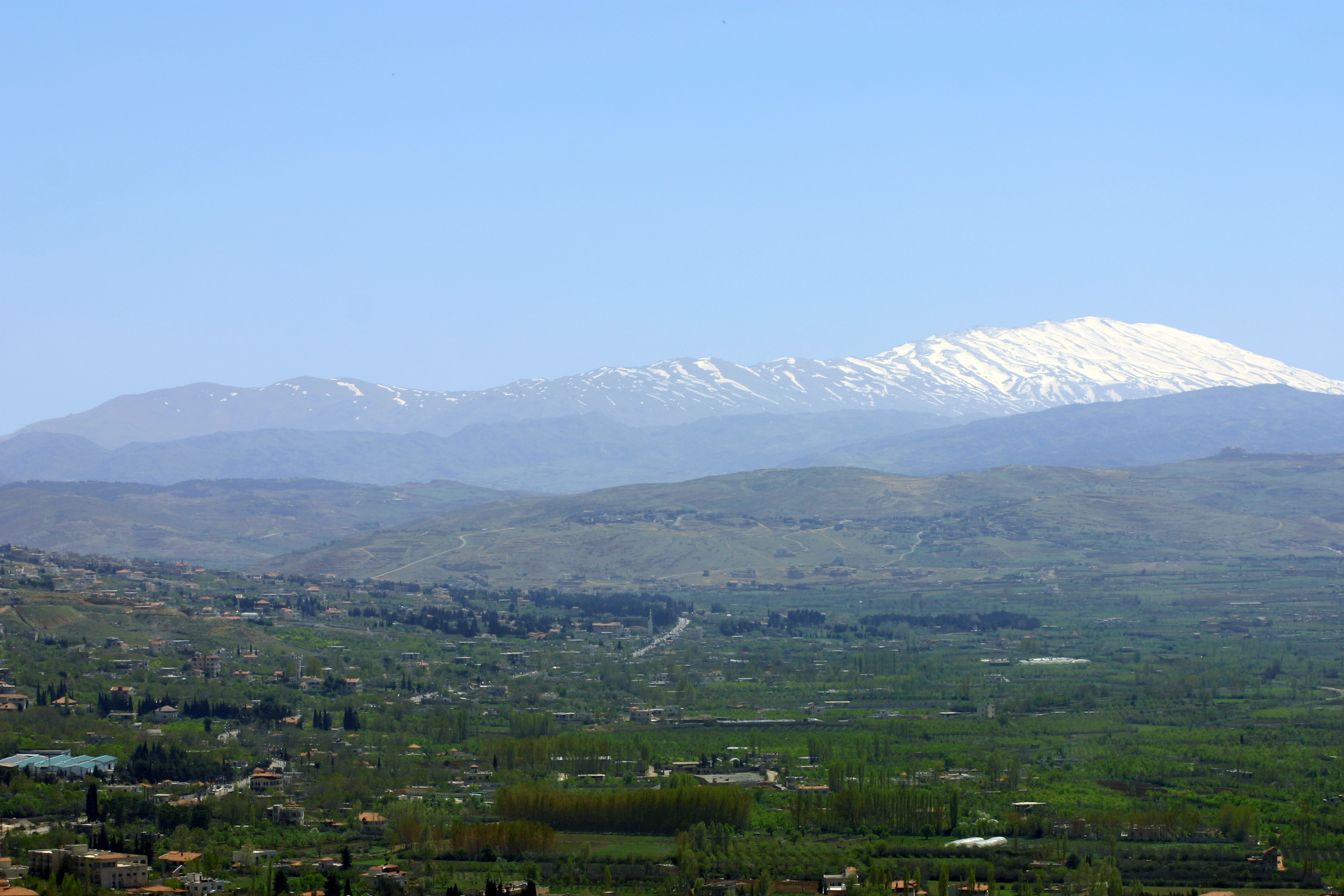
The lush Zabadani valley, home to a fierce anti-regime opposition affiliated to the SRCU. In the background, Mt. Hermon and beyond that Lebanon.
Far from the five-star hotel opposition conferences, the real opposition in Syria is making its voice heard. In what is known as “rural Damascus” (Rif Dimashq), a Times reporter met with local protest organisers affiliated to the Syrian Revolution Co-ordination Union (SRCU), a youth organization that is leading the revolution in Syria.
The town of Zabadani and the nearby village of Madaya are tourist hotspots frequented by the Damascene middle class and Gulf Arab visitors who enjoy its cool mountain air and stunning views over a valley irrigated by fresh spring water. Now however, there are no tourists, just disillusioned young men who demand one thing: freedom.
Click the following link to download the full article in a PDF file:
Syrian farmer hoping for his best harvest_ freedom _ The Times
The report is very telling about the nature of the Syrian Revolution and who is leading it. It is not intellectuals in Damascus or in exile, nor even the much-vaunted Local Co-ordination Committees (mentioned by Hillary Clinton in a recent article), which the local youths accuse of “hijacking” their cause, but young Syrians who come from very ordinary backgrounds who have borne the brunt of mukhabarat oppression.
This is not a peasant revolt – these young men are very media savvy and very well-organized. But they are driven by an instinctive desire to live in freedom. Theirs is not a revolution inspired by ideologues or led by politicians, but it is the natural result of a system that has always viewed them as “germs” and which has denied them the opportunities to better themselves. In the words of the youth leaders in Zabadani: “They treat us like we are nothing. But now we are going to make something of this country.”
Syrian embassy in London under fire for spying on dissidents
I’ve come out of blogging semi-retirement to plug this story. Not that it needs much plugging mind. The Times is big as far as big newspapers go, and according to Wikipedia, one of the oldest.
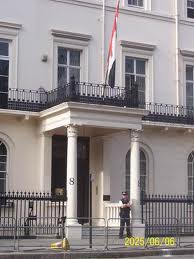
8 Belgrave Square: Syrian intelligence HQ in UK?
In keeping with the paper’s proud tradition of fearless journalism, reporter Laura Pitel has exposed the Syrian embassy’s Vice-Consul as a “representative of the Syrian intelligence service.” Mohammad Samouri is said to have risen through the mukhabarat ranks before being posted to London with the aim of spying on and intimidating members of the Syrian opposition under the guise of ‘diplomacy.’
Click below to read the full report:
The Times: Diplomat ‘leads secret police threats against Syrian opposition in Britain’
The well-heeled residents of Belgrave Square will, I am sure, be aghast. And so they should be. Using diplomatic privilege to conduct a vicious campaign against dissidents is illegal and the Met Police and the Foreign Office should be having quiet words with Mr Samouri that unless he ceases his thuggish behaviour, he will be summarily kicked out of the UK.
Syria’s revolution has yet to capture the world’s imagination
It may sound cruel but over the past few weeks Syria’s pro-democracy revolutionaries have been pushing and shoving for headline space with their Libyan and Yemeni counterparts. It’s not hard to see why. Getting the West interested in your particular revolution is a sure way of maximizing the potential for its success, for every Arab knows that the US and the EU who have long accepted dictators as a fact of life (and therefore legitimized them) can de-legitimize them with a press conference or two. Getting the Western media to talk about your revolution will lead to public pressure, which leads to leaders making statements, paving the way for policies to be formulated and political pressure exerted.
The Libyans have so far received the lion’s share of interest. To be fair, they did get in first when they sparked their uprising against Gaddafi back in mid-February. Their column inches is impressive, if not the present course of their revolution which has stalled on the battlefields of Brega and Ras Lanuf.
The Yemenis have so far followed the rather more peaceful Egyptian model, remarkable given the amount of weaponry in ordinary citizen’s hands. However, lack of economic incentives, the relatively low number of dead and injured and the real threat of Al-Qa’ida has made the Western media somewhat wary of embracing the Yemeni revolution. In many ways its a less “sexier” revolution than Libya’s: there’s no Dr Evil-type villain, no African mercenaries, no perfect Mediterranean backdrops, no oil fields; just thousands of Yemenis in traditional garb squatting in the centre of the capital San’a.
The Syrian revolution took everyone by surprise. I say everyone; some did foretell what was to come but these voices were drowned out by the well-informed experts who assured us that the Syrian regime was ‘immune.’ How the mighty have fallen. The problem as far as the Syrian revolutionaries are concerned was that their timing was awful. By mid-March the Western media was enthralled by the images of NATO jets taking off on bombing runs in Libya, and terrified by the threat of nuclear meltdown in Japan; both stories easily relegated Syria to the back pages.
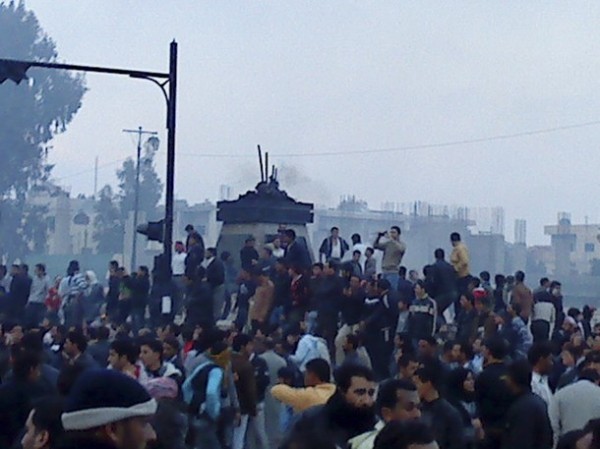
Remains of the day: Hafiz Al-Assad's statue torn down by protesters in Deraa.
Not for long though. Hundreds of protesters turned into thousands, and inevitably, dozens of dead and injured. Syria is at the crossroads of converging political interests; it is a police state par excellence run by a militarized mafioso family; it’s beauty and romance tempered by undercurrents of danger and extremism. The world just had to take notice.
Take notice it did; the problem was that the debate was being framed within the context of reform, not revolution. This has meant that news editors are giving Syria less attention that it deserves. In part this is the fault of the protesters themselves who initially went out onto the streets demanding reform, not regime change. The media as a whole however, Arab and Western, did not pick up on the subtleties of Syrian doublespeak, which inevitably develops in a totalitarian dictatorship of 48 years. When Syrians say they want “change”, they mean regime change, not just a change in the law, and when they talk about “freedom” they mean freedom not to be ruled by the Assads. The culture of fear still permeates Syrian society, and many still prefer to skirt on the edges of the hated “red lines” rather than dare cross them. All this has meant that there is a great deal of confusion as to the real aims of the revolution. The body count is there, but not the clarity of purpose.
In Tunisia it took several weeks for the protests to solidify into a popular, coherent and nationwide anti-Ben Ali uprising. Syria will take longer; the adversary is more sophisticated and considerably more brutal. If the protests continue, which they will, and Libya-fatigue begins to set in, Syria will feature more prominently in newspapers and on news channels. Glad tidings for the revolution as it seeks to find its deserved place in the media limelight.
On Sky News: World’s attention needs to focus on Syria
Sky News called me this morning and asked if I would comment on what has been happening in Syria these last few days. Understandably, I jumped at the opportunity. As far as 24-hour rolling news networks go, Sky News is a big player, and for them to take an active interest in Syria when Libya and Japan have been dominating the headlines must surely be applauded and encouraged.
That got me interested in Sky News’ take on Syria so I started following their hourly news bulletins. To my pleasant surprise, I found their foreign affairs editor Tim Marshall’s take on Syria refreshingly frank and to the point. He understood the Sunni/Alawi issue and he correctly noted that Syria was the most repressive Arab dictatorship out there (that’s right, not Saudi!) Dr Omar Ashour of Exeter University was also there in the studio and he offered an incisive look at the nature of Middle Eastern dictatorships. I found it all very interesting so well done Sky News team.
At around 6:40pm it was my turn to appear live on Sky News as a “spokesman for the opposition.” I am nothing of the kind of course, but there is a saying in Syria: “Better to be known as a rich man than a poor man”. Here’s how the interview went:
I tried to convey two important messages in what little time I had. One was that Syria is the one to watch because regime change there will have widespread regional repercussions, more so than Yemen or Libya. The second message was related to the situation in Dar’a which is critical given the very real risk of massacres by the army and security forces that were descending upon the city in frightening numbers.
Unfortunately, I wasn’t able to get hold of a good quality recording. The best I could manage was this mobile phone footage from my niece who watched the interview on her laptop. It’s not even the whole interview but you get the idea.
If any of you were wondering, that comfortable-looking chair I’m slouched on is a POÄNG armchair from Ikea, available for £90.90.
 Personal website of Malik Al-Abdeh